

Teaching & Learning
Overview
English
We recognise the importance of literacy as a fundamental skill for everyday life and future learning. At Woodlands Primary School, our goal is to develop and extend students’ understanding through engaging, structured, and evidence-based learning experiences.
To support the development of strong literacy skills, we provide a clear and consistent curriculum for all students, ensuring explicit teaching and a shared approach across year levels that enables every child to build confidence and achieve success.
Reading
Over the past several years we have been moving to reading instruction which is centred around the ‘Science of Reading’ and structured literacy. The Science of Reading is based around vast amounts of research which identifies how we learn to read. More information and research around the Science of reading can be found here. We understand that not all students learn to read easily and that reading is an extremely complex skill requiring consistent effective teaching. We provide an environment where we students are supported to read based on evidence based practice.
In our classrooms, we centre our reading program around the explicit, direct instruction of the following pillars of reading:
Each of these pillars builds upon the others, with the ultimate goal of ensuring students can read accurately, fluently and, most importantly, comprehend the texts they read. Our teachers explicitly teach and develop each of these essential components, enabling students to become confident and capable readers. Reading lessons are carefully planned and sequenced across all year levels to ensure a consistent approach throughout the school.
To support this instruction, we implement a structured approach to phonics, spelling and morphology through Little Learners Love Literacy, PhOrmes and Spelling Mastery. Together, these evidence-informed programs provide students with systematic and explicit instruction in phonics, word structure, spelling patterns and morphology. This strong foundation enables students to decode unfamiliar words, develop accurate spelling skills, expand their vocabulary and become more effective readers and writers. These programs are taught consistently across the school to ensure a cohesive and sequential approach to literacy instruction.
In our junior school, students also participate in the Heggerty Phonemic Awareness program. This daily program develops students' phonemic awareness - the ability to hear, identify and manipulate the individual sounds in words - which is a critical precursor to successful reading and spelling.
Students also have access to a range of decodable readers, which are carefully matched to the phonics knowledge they have been taught in class. These books provide opportunities for students to practise and consolidate newly learned skills, building reading accuracy and confidence. As we continue to expand our collection of decodable texts, students will also have access to online libraries and selected take-home readers to further support reading practice at home.
Online Literacy Programs
Our online programs include – Nessy and Little Learners Love Literacy (LLLL) for students in Years F–2, Lexia for students in Years 3–6 and Essential Assessment ‘My Literacy’ for all year levels. Students needing extra support also have access to LLLL, Decodable Readers Australia and Nessy. These programs allow for differentiated instruction both within the classroom and at home.
Reading at home – what can you do to assist?
We strongly encourage students to read regularly at home. Depending on individual needs, this may involve students being read to, reading with a parent or guardian, or reading independently. Exposure to rich literature plays an important role in developing students’ reading comprehension skills and fostering a lifelong love of reading.
When you are at home here are some tips when working with your child/ren:
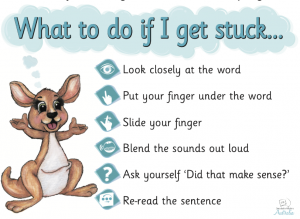
- When your child gets stuck when attempting to decode (read) a word:
- Encourage positivity around learning. Even if you think you were ‘bad at reading’, please rethink how you speak about reading around your child.
- Read, read, read. Reading to, with and listening to your child helps beyond measure. If you can schedule this into your routine, it may assist with it being done nightly.
- If your child makes a mistake, this is ok, it’s a great way for them to learn.
- Be patient, this one can be very tricky but try not to automatically say a word and give your child time.
- Make reading special – create a space where your child is comfortable reading so it is enjoyable for them.
- Once is not enough – encourage your child to reread a book – this will assist with their understanding of the story and with success with fluency.
- Talk about books! The interesting vocabulary, the storyline, any new learning. Relating books to a previous experience is a great example of helping students to understand what they have read.
- Practice spelling or sounds when these are given to your child.
Writing
With our writing program our teachers use explicit direct instruction to deliver the curriculum content.
Our teachers all follow the writing process so that all students are aware of the various stages of writing. This includes; planning, composing, revising, editing and publishing. Our writing program also incorporates elements of Spelling Mastery, Phormes, LLLL, VCOP and Big Write strategies. These programs bring the fun back into writing and most importantly, challenge students throughout the writing process.
We strongly encourage students to practice speaking, reading and spelling at home to further consolidate the skills being learnt within the classroom. The partnership between the school and home is a key component of successful learners.
Oral language sets the foundation for the reading and writing skills that students develop as they progress through school. Through the use of games, turn and talk and various oral language activities our students are given the opportunity to practice respectful dialogue and active listening. Our students are encouraged to reason together, collaborate and build upon their understanding.
Mathematics
At Woodlands Primary School, we want students to enjoy mathematics, feel empowered, and experience regular success.
We teach Mathematics through explicit instruction, using a clear instructional model of “I do, we do, you do”. Lessons are carefully structured to build understanding step-by-step, ensuring all students can access new learning and develop confidence in mathematical concepts. We incorporate daily fluency practice and regular reviews to support students in developing automaticity and mastery of essential skills, alongside opportunities for problem solving and reasoning.
We aim to develop independent learners with the capacity for deeper thinking and the confidence to explore mathematical concepts. This includes students constructing meaning, thinking mathematically, solving a variety of problems, articulating their thinking, and correctly using mathematical language.
As a result of learning mathematics at Woodlands Primary School, all students will be encouraged and supported to:
- develop a positive attitude towards mathematics and an awareness of its relevance in the real world
- develop competence and confidence in mathematical knowledge, concepts, and skills
- develop an ability to solve problems, reason, think logically, and work systematically and accurately
- develop accuracy in computational skills consistent with their age and stage of development
- understand and use mathematical language
- develop an ability to work both independently and cooperatively
- be risk-takers who are willing to make mistakes and learn from them
- articulate their thinking confidently during mathematical tasks
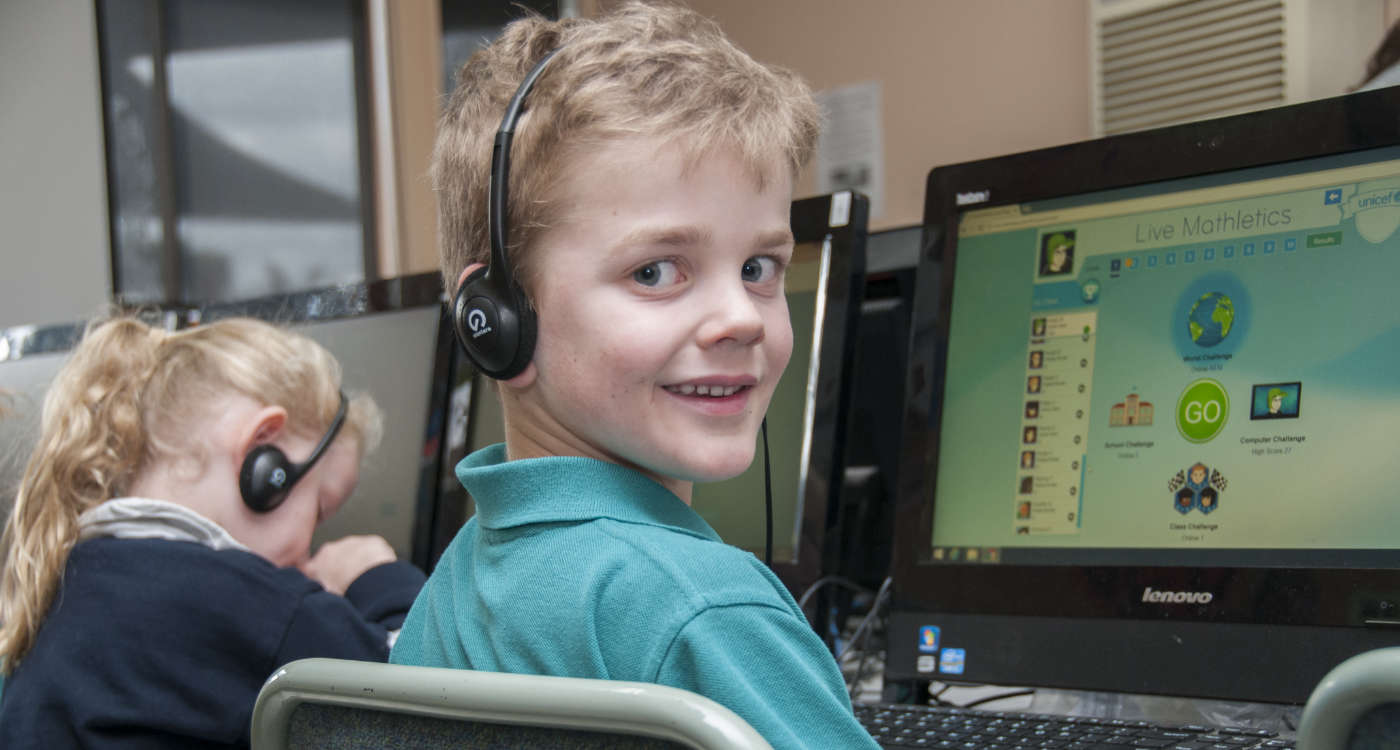
We use resources such as Essential Assessment and Mathletics to support teaching and learning, provide targeted practice, and gather assessment data to inform teaching and track student progress.
Inquiry
At Woodlands Primary School, we teach the Humanities through a combination of explicit instruction and an inquiry-based approach. Students develop a strong foundation of knowledge through our knowledge-rich curriculum before applying their understanding by asking questions, investigating ideas, researching information, and presenting their learning to authentic audiences.
Our approach encourages students to think critically, make connections across concepts, and deepen their understanding of the world around them. Learning experiences may include excursions, student presentations, classroom inquiries, and opportunities to share learning with families and the wider school community.
The aims of our Inquiry units are to:
- Explicitly teach content to assist students understanding of a range o topics.
- Nurture and develop the students’ natural inquiring mind, helping them to become lifelong learners who continue to learn how to learn.
- Develop the students’ ability to pose questions and plan, research, investigate and search for answers and solutions.
- Develop the skills needed to convert information and answers into useful knowledge that can be applied to new situations and prompt further learning.
- Provide students with different ways of viewing the world, communicating about it and successfully coping with the questions and issues of daily living.
- Develop an understanding that all knowledge changes over time as people challenge, shape and contribute to it.
- Demonstrate that there are often multiple perspectives for looking at, analysing and understanding things.
- Provide learning opportunities that are more relevant as concepts are learned in context and relate to existing knowledge and experiences.
- Develop thinking processes and strategies that are outlined in the Victorian Curriculum.
- Provide rich learning opportunities that are relevant to the students and cross over all domains eg. English, Mathematics, Civics and Citizenship, Science, Health, Humanities, ICT, Critical and Creative Thinking, Technology and Art.
- Encourage students to become independent, resourceful and responsible learners.
Physical Education
Foundation – Year 1 Level
Physical Education at the Foundation – Year 1 Level occurs weekly for one 30 minute session. The emphasis at this level is on developing fundamental motor skills which includes ball handling. Fundamental motor skills essential for all sports and are; throwing, catching, kicking, running, jumping, bouncing a ball, leaping, dodging and striking. Ball handling sessions develop skills such as throwing, catching, fielding, hitting, kicking and dribbling. Warm up games and other lesson introduction activities focus on all aspects of fitness; the development of endurance, speed/agility, joint flexibility and strength. Simple games are used as a means of teaching the need to follow instructions and drills are used to develop specific skills. Safety and keeping healthy in terms of looking after your body are discussed regularly during lessons.
Year 1 – Year 6 Level
Physical Education at the Year 1 – Year 6 Level occurs weekly for one 60 minute session. A brief outline of physical education at these levels includes:
Ball Skills: Continued development of Fundamental Motor Skills and their application to game situations, including modified versions of traditional major games.
Fitness: Development of endurance, speed/agility, joint mobility/flexibility and strength with an emphasis on cardio/vascular fitness for health.
Athletics: Introduction to athletics events such as sprinting, jumping, throwing, hurdles and relays.
Gymnastics: Continued activities in movement exploration and the introduction of more formal gymnastic movements including rolling, balancing and basic activities on apparatus.
Year Level Sport
Foundation – one 30 minute PMP (Perceptual Motor Program) session per week. This is a station based activity where children learn to listen to instructions and develop an understanding of language through movement. The program aims to not only allow time for children to develop co-ordination, but memory and eye tracking skills necessary for reading and spelling. PMP is ran on Tuesday mornings.
Year 1 – weekly one 60 minute session that further enhances Fundamental Motor Skills.
Year 2 – weekly one 60 minute session that further enhances Fundamental Motor Skills.
Year 3 – weekly one 60 minute session that further enhances Fundamental Motor Skills, basic sport specific skills and basic game play.
Year 4 – weekly one 60 minute session that incorporates Fundamental Motor Skills with sport specific skills and game play.
Year 5 – weekly one 90 minute session that supports the development of sport specific skills and the whole health and physical education curriculum.
Year 6 – weekly one 120 minute session where children are involved in Interschool Sport competition playing specific sports against local schools for summer and Winter Sports. Year 6 Sport is on Fridays.
Visual Arts
At our school, students are immersed in the vibrant world of Visual Arts through dedicated and fully equipped art rooms as well as the inspiring outdoor grounds. Through a diverse array of activities, students are engaged happily, honing their abilities to express their perspective on the world through art.
This comprehensive approach not only fosters their growth as artists but also enhances their skills across the curriculum. By nurturing creativity, critical thinking, imagination, collaboration, problem-solving, risk taking, and self-direction, students are empowered to excel in various areas of their academic journey.
Through exploration and practice, students delve into the fundamental elements of art including line, form, texture, shape, colour, space and value. They draw inspiration from the works of renowned artists, learning from their techniques and styles.
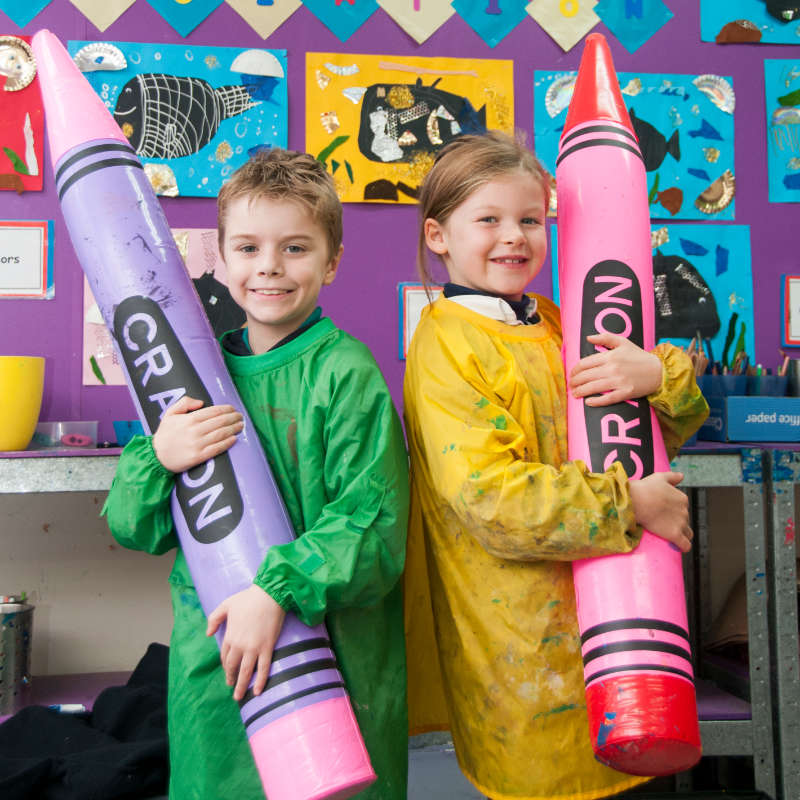
Furthermore, the curriculum includes the study of Art Appreciation, encouraging students to sharpen their observational skills and engage in meaningful discussions about artworks. This holistic approach ensures that students not only create art but also develop a deep appreciation and understanding of it.
Overall, our Visual Arts program provides a rich and stimulating environment where students can explore, create, and grow as artists while gaining valuable skills that transcend the boundaries of the art world.
Performing Arts
Students from Foundation to Year 2 attend Music and Dance Lessons for an hour per week for the whole year and our Year 3 & 4 students attend for an hour per week for half the year.
Students will be learning a variety of songs and rhymes and having lots of fun with music. They will enjoy playing and experimenting with instruments in the music room such as drums, keyboards, glockenspiels and simple percussion.
Lessons include activities involving singing, playing instruments and moving and responding to various styles of music. Students will investigate through song and dance the aspects of music including beat, rhythm, tempo and dynamics.
Students will participate in various dance styles, learn dance sequences and respond to dance performances as well as having opportunities to choreograph and compose dances of their own
As students progress they will be introduced to simple music notation and will have opportunities to compose and play their own simple music using percussion instruments.
Students begin learning how to play the recorder in Year 2 and this continues on throughout Years 3 & 4. They will learn how to correctly hold and play the instrument as well as learning to play some simple songs. With each new song students will be introduced to more complex music notation developing an understanding of written music.
Stomp
We run a whole school dance program named ‘Footsteps’ during Term 3 of each year. The dances the students learn are performed at our fabulous end of year concert held in December.
Alpha Show
The dynamic theatre company Alpha visits Woodlands annually during Term 2 preforming for our Foundation to Year 4 students. It is a great opportunity for our students to let their imagination run wild and experience real quality theatre.
Auslan School Choir
Choir runs every week at lunch times in the Performing Arts Hall. Students of all ages are invited to participate in choir.
Woodlands Got Talent
Our annual Talent Showcase invites students from Year 2 to 6 to audition to be a part of our Top 10 performers. The one night event includes performances from the Woodlands Choir, Dance Group and presentations from our Media students.
Science
The science program at Woodlands is a curriculum based on the idea of educating students in four specific disciplines, biology, chemistry, physical science, Earth and space science. It is an interdisciplinary and applied approach to teaching, with skills and knowledge important for all stages of our learning, jobs and everyday lives.
Year levels from 3-6 have a weekly hour-long science session exploring all learning areas.
The focus of science lessons is largely hands on, to engage students and develop their inquiry and observational skills.
LOTE - Auslan
Auslan is the new language which will be taught across all year levels at Woodlands. “Auslan (Australian sign language) is the sign language of the Australian Deaf community. It was developed in Australia by people who are deaf so that they could communicate with others. The term Auslan is an acronym of Australian Sign Language, coined by Trevor Johnston in the early 1980s, although the language itself is much older.” (Betterhealth, 2021).
We are excited to offer this program, which will not only teach our students a second language but also encourage communication and inclusivity within our school community.
Digital Technologies
Digital Technologies is a key component of the specialist program at Woodlands Primary School, encompassing students from Foundation to Year 6.
Junior school students (F-2) engage in a 30-minute Digital Technologies lesson once a week throughout the academic year.
For Year 3-6 students, the program extends to a weekly one-hour lesson for two terms, either in term 1 and 2 or term 3 and 4.
Exploring Digital Technologies:
In our Digital Technologies curriculum, students:
- Explore the latest technologies shaping our world.
- Investigate who uses these technologies and how they contribute to problem-solving.
- Gain insight into the inner workings of these technologies.
- Develop an understanding of data and its significance in our global context.
- Cultivate diverse problem-solving approaches and critical thinking skills.
- Explore applications of technology across various domains such as education, sports, business, leisure, and fostering connections among people.
Year 3-6 1:1 Laptop Program:
Students in Year 3-6 are actively involved in the 1:1 Laptop Program, using Google Chromebooks. This initiative empowers them with access to the Google Education Workspace, facilitating seamless creation, collaboration, communication, connection, and contribution to their learning experiences.
Year F-2 Access:
Even our youngest learners in Foundation to Year 2 have access to a set of Chromebook Laptops, integrated into their Digital Technologies lessons.
eSmart Cyber Safety Initiative and Inform & Empower Program:
Woodlands Primary School places a strong emphasis on creating a safe and positive digital environment for our students across all year levels. Proudly accredited as an eSmart school by The Alannah and Madeline Foundation, we have implemented proactive measures to enhance cyber safety, address cyberbullying, and promote responsible online behaviour. We’ve partnered with “Inform and Empower” to integrate their comprehensive Cyber Safety Program into our curriculum. This initiative ensures that students, from Foundation to Year 6, receive valuable insights and skills to navigate the digital landscape responsibly. Through engaging workshops and educational modules, our students learn about cyber safety, online etiquette, and responsible technology use. Together, the eSmart initiative and the “Inform and Empower” program form a robust framework, fostering a culture of digital literacy and empowering our students to thrive in the ever-evolving digital age.
Task-Centric Approach:
At Woodlands, our paramount goal in Digital Technologies is to empower students to focus on the task at hand rather than being preoccupied with the technology they are using. This approach fosters a deeper engagement with learning objectives.
Library
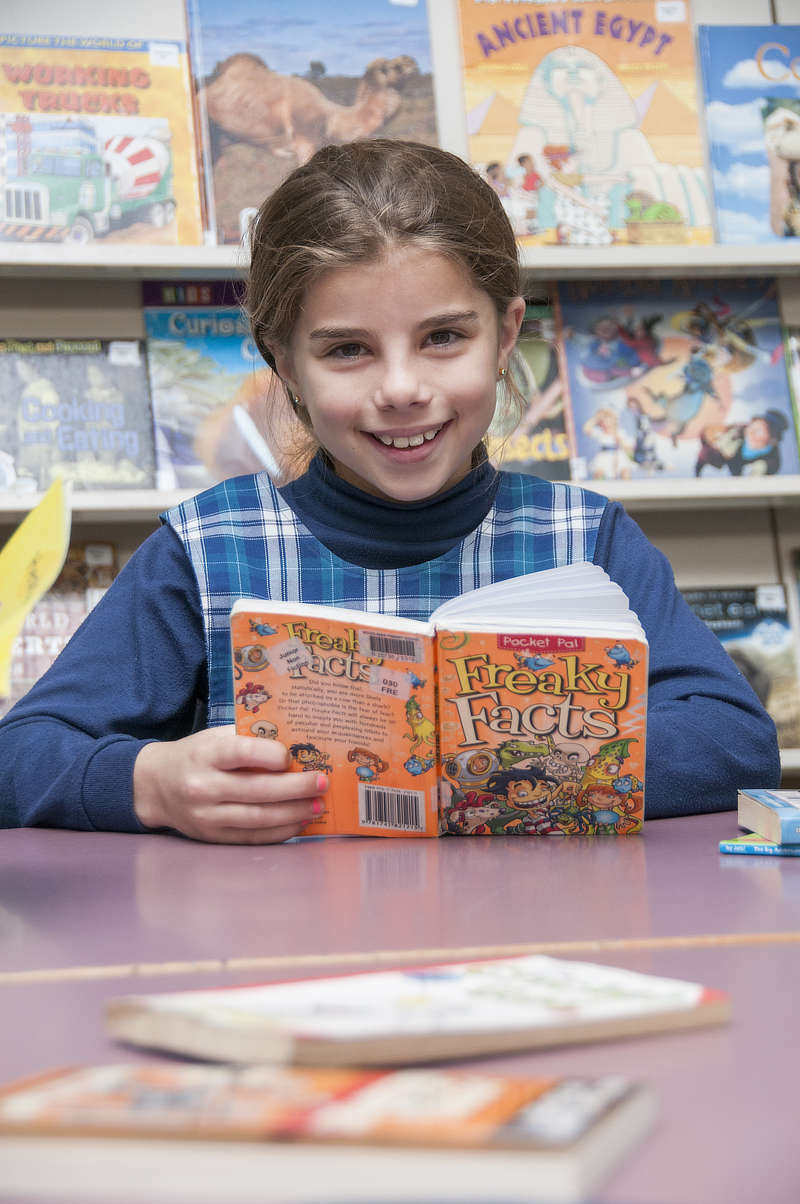
Woodlands students have a program rich in literature and are able to borrow books from our well-stocked Library.
We focus on enjoyment, imagination and information through stories and non-fiction material.
Students from Foundation – Year 6 receive a weekly Library lesson (30 minutes) taken by their class teacher.
Lessons focus on literature appreciation, how to use the library, as well as borrowing books of interest for students.
Students are encouraged to be responsible for remembering their Library ‘Book Borrowing Day’ – It is vital that children return their book/s so they can borrow a new book. Students will not be able to borrow if they have not returned their book/s.
The Library supports and extends the Units of Inquiry being studied in each year level and provides classrooms with a variety of resources to enrich each Unit.
Library Bags
For borrowing purposes, children are encouraged to have a waterproof library bag, labelled with both their first and last names and grade.
A Library Bag:
- Protects the book
- Ensures the library book is kept separate from household books when not in use, making them easier to find on Library Book Borrowing Day
- Makes it easier for students to carry
- Most importantly protects library books from damage, especially leaking drink bottles
Waterproof Library bags are available from the Bounty Shop, however you may use any waterproof, protective bag, preferably around the size of a pillowcase to accommodate our larger books.
The Library is open, before school from 8.45 – 9.00, recess from 11.00 – 11.15 and Friday lunchtime each week between 1.30 – 2.00 for quiet reading and borrowing (students need to bring a waterproof library bag to be able borrow).
During the year, the Library hosts two Book Fairs, June and December, as well as supplying brochures for Book Club twice per term.
Digital Arts
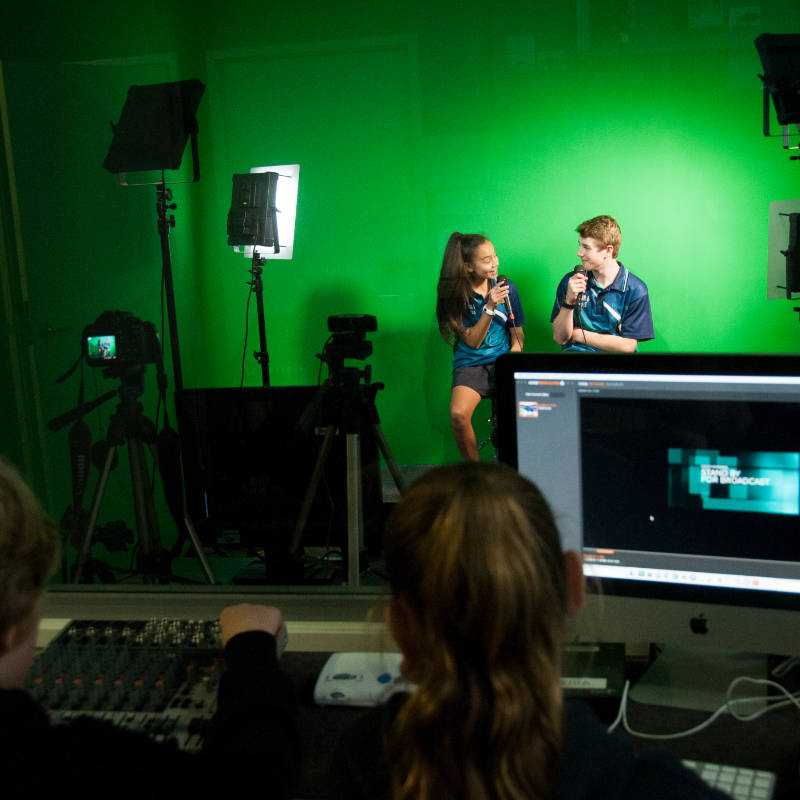
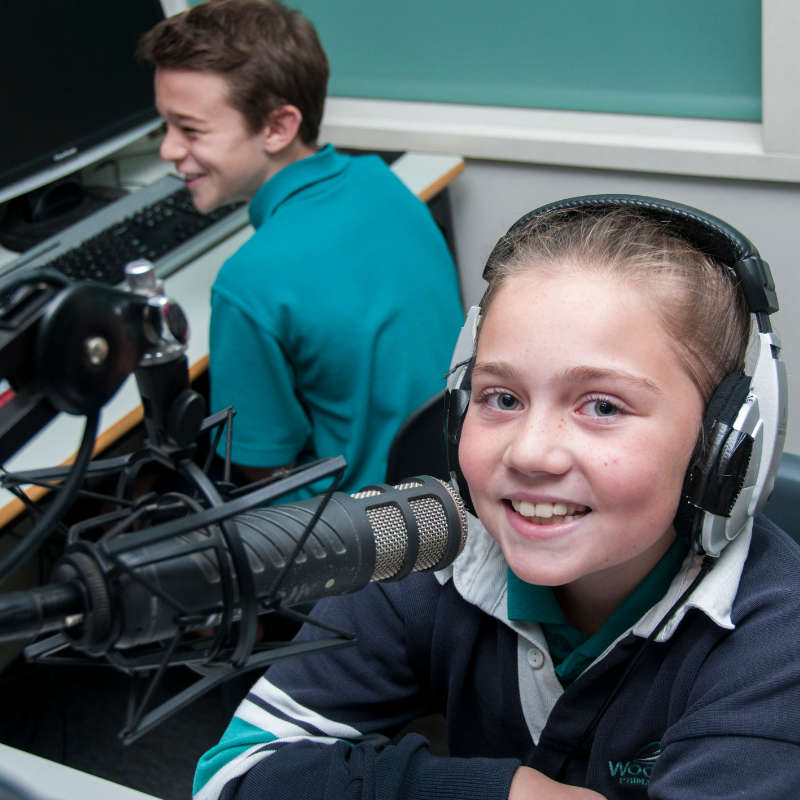
Digital Arts introduces our Year 5 & 6 students to a broad range of media texts, Students to work individually and collaboratively to develop their skills in various areas such as:
- Photography by exploring the concepts of composition, in particular the rule of thirds and camera shots, which allows the students to create visually captivating images.
- These skills are further developed in a filmmaking unit with students using iMovie, to create a professional-looking movie trailer.
- Students also delve into script making to produce a Lego themed stop motion animation video, and
- Students create their own music using GarageBand, and dance movements via Video Star.
Camps
School camps play a vital role in building character and resilience in our students, which we value very highly at Woodlands Primary School. We deliver camps from Year 3 through to Year 6, each with a different location and challenge.
Term 1
Year 6 Camp (The Summit Camp) 3 days, 2 nights
To begin their last year of primary school with a bang, the Year 6 students set off to The Summit Camp, where they will spend three days near Trafalgar in Gippsland challenging themselves in various outdoor recreational activities such as, The High Wire, Leap of Faith, Sky Bridge, Rock Wall, Abseiling, Human Fooseball & the Waterslide.
Term 2
Year 4 Camp (Somers School Camp) 3 days, 2 nights
Our Year 4 students head off to Somers, only 30 mins drive from Woodlands Primary School. It is here that they are introduced to some challenging activities such as the Giant Swing, Flying Fox, Archery and the Ropes Course. The camp backs directly onto the shores of the Westernport Bay, with the Coolart Wetlands located just next door. Both of these environments and its local wildlife create fantastic discussions and lead to further research from the students back at school.
Term 3
Year 5 Camp (Urban Camp) 3 days, 2 nights
The Urban Camp is a fantastic opportunity for our students to visit some of Melbourne’s finest landmarks, whilst also experiencing the hustle and bustle of the inner city. Over 3 days, the students will travel by train, tram and foot to visit various places such as:
- MCG
- Eureka Skydeck
- Crown Cinemas
- Melbourne Icehouse
- Old Melbourne Gaol
- Melbourne Museum
- Hardrock Rock climbing
- Queen Victoria Market
- Yarra River (Cruise)
Term 4
Year 3 Camp (YMCA Camp Manyung) 3 days, 2 nights
Our Year 3 students have been just started attending Camp Manyung for the last 2 years and we absolutely love it! Camp Manyung provides our students with plenty of fun activities such as Archery, Gaga Ball, Radio challenge, Orienteering and Disc Golf, whilst also encouraging students to step out of their comfort zones with The Giant Swing, Tree Surfing and the Flying Fox. It is also located a mere 400m from the beach, so the students also spend half a day doing water and sand activities!